
What Putin and Obama said at the United Nations
The very essential bits and gist of the 2 biggest speeches in New York today
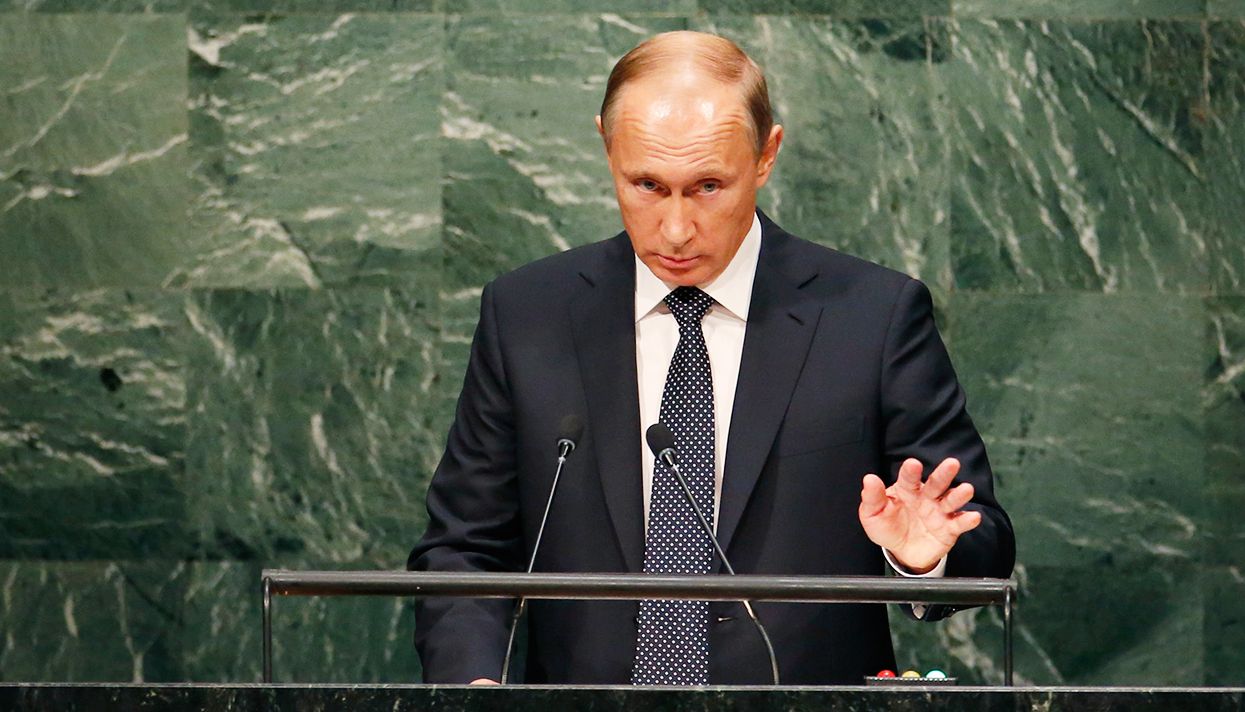
When Barack Obama stepped up to the podium today in New York to address the UN General Assembly, Vladimir Putin was descending the stairway from his jumbo jet, having just landed in the United States. A couple of hours later, Putin also appeared before the United Nations, where he touched on many of the same issues that trouble the world community today—the Syrian civil war, above all else. Based on the speeches delivered in New York today, at no time perhaps since the Cold War have the views of Washington and Moscow so diverged. Meduza summarizes the main disagreements between Barack Obama and Vladimir Putin.
The war in Syria
Barack Obama: Bashar al-Assad is a tyrant who bombs his own people, and therefore cannot remain in power. After such serious bloodshed, there can be no discussion of a return to the prewar status quo. Syria's problems are not an internal issue, but a problem for the global community. The US is prepared to cooperate with different nations, including Russia and Iran, in order to achieve Assad's "managed" exit from office, but Washington is unwilling to endorse any plan that leaves him in power. Resolving the Syrian crisis requires more than military force alone.
Vladimir Putin: Bashar al-Assad is Syria's legitimate president. UN members should support Assad, in order to restore stability to the country. No one but Assad's regime and the Kurds are currently fighting ISIL. Under the auspices of the UN, it's necessary to form an international coalition to fight ISIL and other terrorists. Any actions that circumvent the UN (Putin presumably has in mind US-led airstrikes against ISIL fighters) are illegal. Critics say Moscow's aid to Assad is tied to Russia's growing ambitions in the region, as if other nations lack any regional ambitions. Refugees need to be helped, but the only real aid is setting things right in the countries from which they fled.
The war in Ukraine
Barack Obama: Russia annexed Crimea and supports continued aggression in eastern Ukraine. The US has almost no economic interests in Ukraine, but it cannot remain on the sidelines, when national sovereignty is so flagrantly violated. If such actions are left unanswered, they could be repeated at any time anywhere. The United States levied sanctions against Russia to demonstrate the consequences of such aggression—not because Washington wants to return to the Cold War.
Vladimir Putin: Actors on all sides in Ukraine must observe the latest Minsk agreement, which is the only path to peace. There is no military solution in eastern Ukraine. It is necessary to take into account the interests of the people living in the region and respect their choice to side with the separatists. The sanctions against Russia are bad, insofar as they were levied in circumvention of the United Nations, and violate the free-trade norms of the World Trade Organization. The sanctions are also aimed at excluding Russian enterprises from market competition, which is a loss for the world.
Everything else
Barack Obama: Democracy is good and dictatorship is not. Dictatorships are unstable, and at much greater risk than democratic states of being overthrown. Regimes that repress demonstrators don't show strength, but fear and weakness. States that fear their own people eventually fall. The United States wields the most powerful army in the history of the world, but it alone cannot solve the world's problems. Cooperation is a necessity.
Vladimir Putin: Certain states are trying to make the world unipolar. They export so-called "democratic revolutions," though now they themselves see how this leads to social catastrophes. The Soviet Union committed similar blunders, believing that "social experiments" based on ideological convictions could reform foreign countries. Rather than learn from this tragedy, however, certain countries today are committed to making the same mistake all over again.