
Russia's chief censor thinks the Western media is too dependent on Western society
Meanwhile in Russia, on Wednesday, February 10, 2016
- Russia's Foreign Ministry is displeased that German police are considering hate-crime charges against a Russian journalist who reported a bogus story about a 13-year-old in Berlin who was allegedly raped by immigrants.
- ICQ may be everything you love about present-day 2001-era instant messaging, but—contrary to certain rumors—Vladimir Putin won't be accepting questions on this platform for his next TV marathon.
- An anti-corruption activist accused of stealing a worthless painting in Russia was detained for two weeks in Cyprus and threatened with extradition. Today, a court suddenly released him.
- For the first time in 18 years, Russians are spending more than they earn.
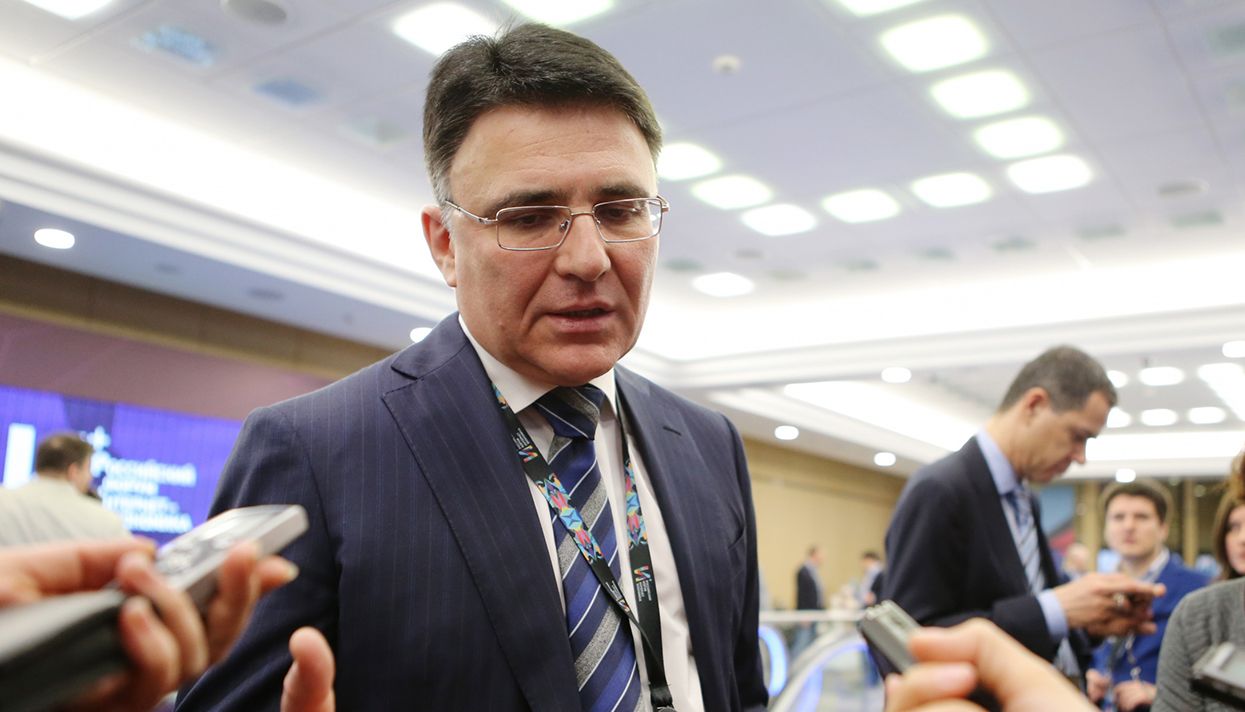
- The guy managing Russia's government censor would like you to know that he's got some serious concerns about Western media bias.
Russia to Germany: you're trampling press freedoms
An investigation by German police against a news correspondent for the Russian TV station Pervyi Kanal amounts to “direct pressure on the media,” according to Maria Zakharova, the spokesperson for Russia's Foreign Ministry. Though no formal charges have been filed, Berlin police have begun reviewing claims that Pervyi Kanal ran a false story about a local 13-year-old girl from a Russian-speaking family being raped by Arab immigrants, in an effort to incite ethnic hatred.
Zakharova says Western countries would be wise to look at their own news media, which she accused of repeated “disinformation.”
Sorry, remaining ICQ users, but Putin ain't listening
The Kremlin's spokesman, Dmitry Peskov, has denied rumors that President Putin will accept questions for his next “direct line” (where he answers a marathon of queries from the “general public” on live television) via ICQ, one of the most popular instant messaging programs a decade ago. “We'll be collecting information in different formats, but ICQ won't be among them,” Peskov said today.
On February 10, the newspaper Kommersant reported that it would be possible to submit questions via ICQ for Putin's next “direct line,” which is scheduled for Thursday, April 14.
Cyprus backtracks and frees anti-corruption activist wanted by Russian police
For two weeks, authorities in Cyprus jailed Nikita Kulachenkov, who works at Alexey Navalny's Anti-Corruption Foundation (FBK), which exposes graft and dirty dealings in the Russian political elite. He was detained on January 24, following a request by Russian law enforcement, and an extradition hearing was set for Friday, February 12. Unexpectedly, however, a local court released Kulachenkov today, following appeals from Cyprus' justice minister and attorney general.
Navalny's group maintained that Cyprus lacks the authority under EU law to detain Kulachenkov, given that he's received political asylum in Lithuania. Kulachenkov worked on FBK's recent documentary film targeting corruption under Russian Attorney General Yuri Chaika.
Kulachenkov is wanted in Russia for allegedly stealing an inexpensive painting posted on an outdoor fence. The picture was then gifted to Navalny for his birthday. Kulachenkov's accomplice, another of Navalny's allies, has already been sentenced to 240 hours of community service for the crime.
Goodbye, liquidity
For the first time since 1998, Russians spent more than they earned last year. According to annual figures from the Russian Federal State Statistics Service, the gap between spending and earning was 420 billion rubles ($5.3 billion) in 2015, as people hurried to repay loans and get rid of cash rubles, in part by buying foreign currencies.
Russia's chief censor thinks the Western media is too dependent on Western society
At a lecture today before Moscow State University journalism students, the head of Russia's state censorship agency said the news organizations BBC and Reuters is “professional,” but “biased.” Roskomnadzor head Alexander Zharov said he thinks the Kremlin-controlled news agency RT is more objective.
“I consider the work of the BBC, Reuters, and other Western mass media to be professional and it conforms to the demands of the society in which they're based. I think they're absolutely dependent on those societies, and consciously or unconsciously they follow the ideology that's promoted in this society,” Zharov explained.
According to the newspaper Kommersant, Zharov also said “the state always protects its own journalists,” referring to Russia's readiness to aid Ivan Blagoi, the Pervyi Kanal journalist whom Berlin police are investigating for inciting ethnic hatred (see above).