
‘In Russia and in Moscow, the rules change every year’
Shopping pavilion owners talk about the demolition of a city's small businesses
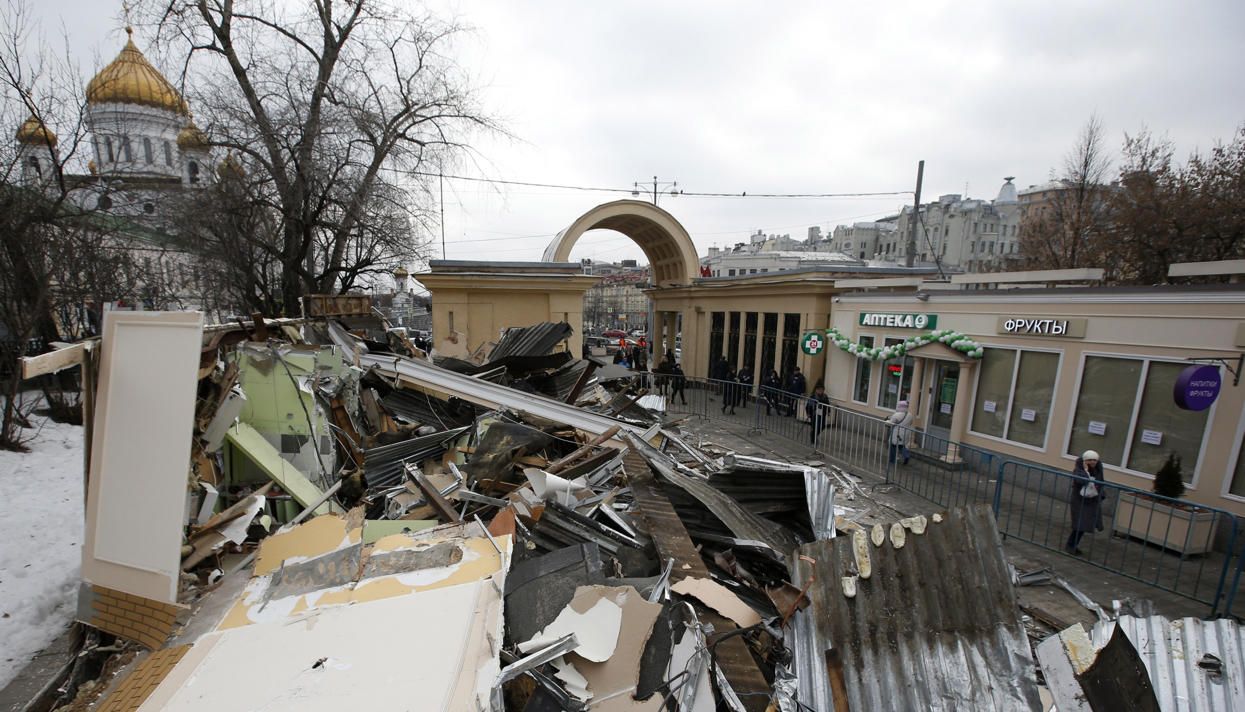
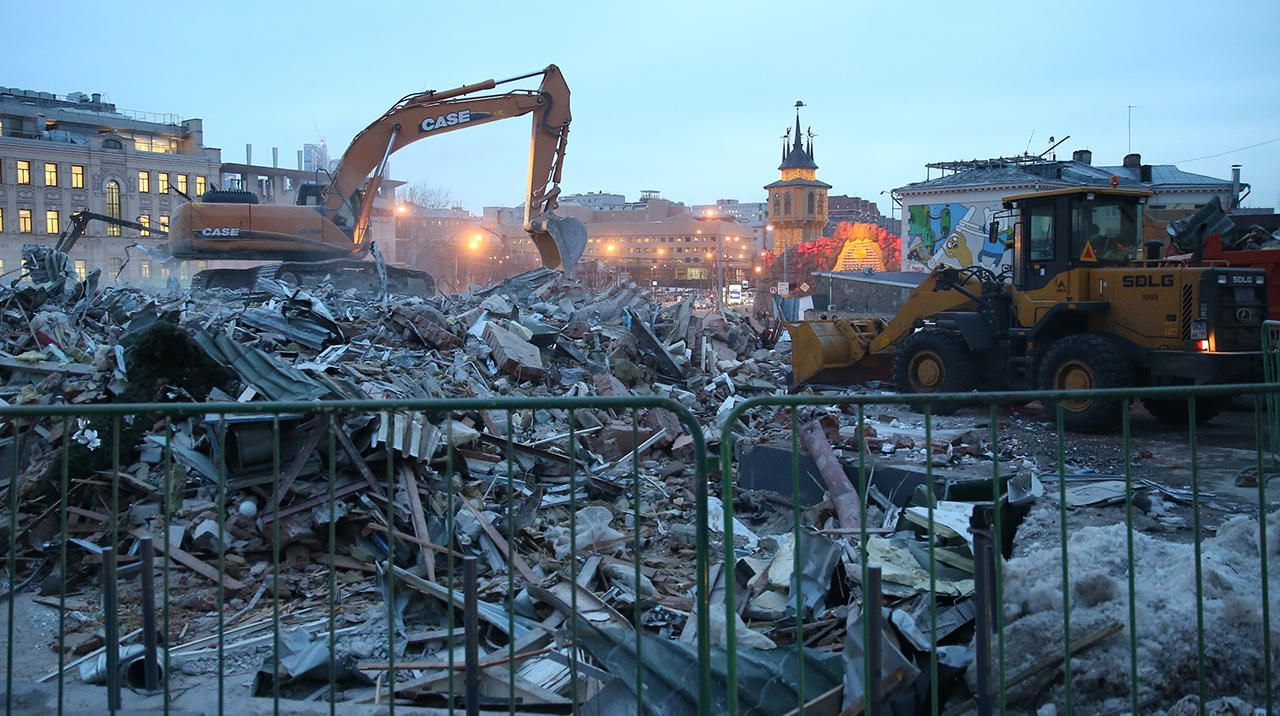
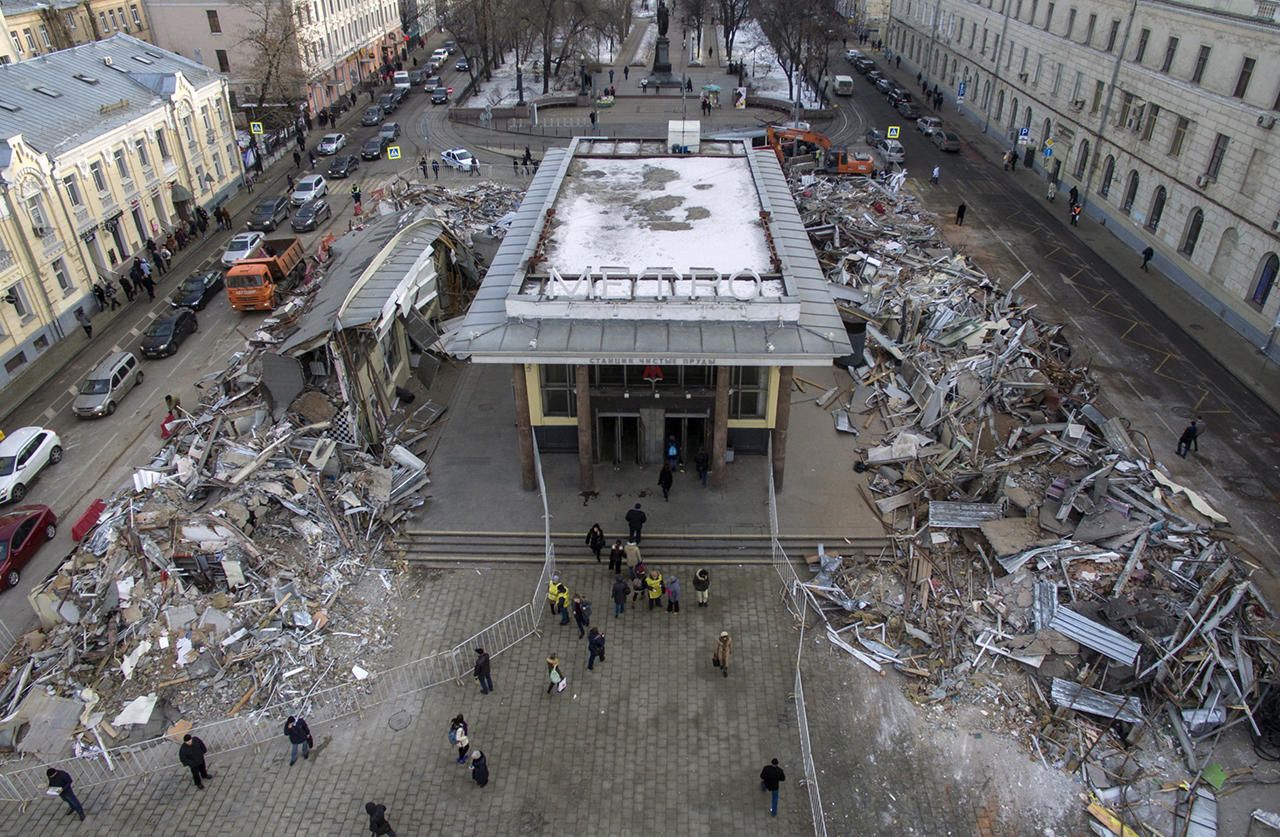
This year, the Moscow Mayor's Office has conducted a series of demolitions targeting shopping pavilions throughout the city. In June, the authorities destroyed more than 100 kiosks and stores, declaring them to be illegal structures built without the proper authorization. In the past, the owners of these shops have appealed directly to Vladimir Putin, hoping he will declare a moratorium on the demolitions. In late June, Meduza spoke to a few store owners and their representatives, who believe Moscow city officials are breaking the law, claiming that these businesses actually have all the required paperwork.
Irina
Attorney representing six owners of shopping pavilions slated for demolition
I found out about the planned demolition accidentally, coming across a news item on the Internet. All of our six retail facilities in the Southern administrative district are listed for demolition. Each of the properties has permits signed by the district prefect [presently, deputy mayor of Moscow] Pyotr Biryukov: acceptance acts, development authorization, land lease agreements—all the relevant documentation.
In 2013, the prefect's office and the Moscow City Property Department filed a lawsuit with the commercial court with a claim to determine our shopping pavilions unauthorized and to take them down. However, we won that case. Here is a citation from the court ruling: "Therefore, the items in question do not meet any qualifications of an unauthorized construction stated in Art. 222 of the Civil Code." The prefecture's lawsuit was dismissed and the court ruling came into force. In other words, the court admitted that the construction of our objects was duly authorized and provided an official proof. I don't understand what gives them the right to take down legitimate real estate items. We have the decision of the commercial court, how do they expect to overrule it?
What explanation can they provide? Evidently, the government is simply trying to avoid refunding the owners at the current market value of their properties. It is ubiquitously stated that they are willing to offer some kind of compensation, but what they are implying is the cost of demolition. That is, they are going to refund the amount spent on hiring a tractor or an excavator. I wonder who's going to compensate the value of the building and construction costs? What is more, we have a land lease agreement which is valid for 49 more years, and our properties could stand on that land for years to come, had they not been deemed unauthorized. The situation doesn't seem fair to me.
The formal procedure is all the more surprising: we are given some two months to lodge an appeal. At the same time, it is quite obvious that procedural time limits won't let us go through with the appeal, as only the first title of court will have had enough time to hear it. The city acts in its own interests regardless of anyone else's.
In February, the first stage of demolition hit one of our properties. And we are still litigating for that demolition order to be determined illegitimate. A while later we filed another lawsuit to get a compensation for our losses, followed by a notification from the government [of Moscow] about a counter-action. That is, in addition to accusing us of unauthorized construction and tearing down our properties, they also threaten to fine us.
I haven't yet heard about any satisfied claims for compensation after the shopping pavilions were demolished in February.
My managers have payed a number of visits to the prefecture, the city property department and the State Inspectorate for Real Estate under Moscow City Government, presenting all the relevant documents and the court ruling, but the authorities have shown little interest. Naturally, providing an alternative plot of land is out of the question as well—the owners have to apply for it on a common basis.
We have rented floor space in our pavilions to a number of chain stores: their losses won't be as dreadful as those of individual entrepreneurs, yet still they have operated here for years on end. Now everyone is lifting their hands in dismay, not understanding what on earth is going on, what needs to be done next and why this government has so little regard for the law. Dmitry Peskov, representative to the guarantor of constitution [the Russian president's spokesman], claims that "kiosks are out of the Kremlin's scope of interests." However, these are not just kiosks, these are entire buildings with rightful proprietors. We are charged with obtaining ownership in violation of the law. I now have before me all the documents signed by Biryukov. Does that make him the conman? First signing the papers and now saying the construction was unauthorized? This country is completely absurd.
Alexander
Owner of retail facilities
Frankly speaking, I'd prefer not to disclose my surname, as I still hope to get at least a small compensation. The thing is, after the first wave of demolitions, owners of four properties went to court and have already received compensation. They filed lawsuits about ungrounded inclusion of their items in the demolition order right after it was issued, back in December 2015. Unsurprisingly, they lost, but with a certain outcome. Albeit indirectly, through intermediaries, the authorities nevertheless consented to refund their losses. A few days prior to the final hearing, the owners of properties up for demolition were approached by major entrepreneurs, construction investors and developers who were close to Moscow authorities and offered a certain amount of money. In exchange, the proprietors were supposed either to transfer the ownership of their businesses or to grant a power of attorney for representation in court. Eventually, the attorneys of these major businessmen allowed the city to win the case.
I was told that the owners received almost the market value of their properties: some were given apartments and some were paid in cash. So the most important thing now is to file a lawsuit to Moscow City Court to contest the inclusion of a property in the demolition order. The outcome is still unclear, but since this mechanism is available, everyone wants to make use of it.
As I am well aware, after the Supreme Court has ruled that the city was acting lawfully back then, in February, there is little possibility of compensation. But I will try and find any possible loophole and I'll carry out a comprehensive assessment of the property and its market value in order to claim losses afterwards.
They are prepared to refund only the demolition costs. That is to say, I hire a construction team, they take down my property, bring an excavator and a dump truck, and remove the debris, then I restore the pavement and tidy up – this is the scope of work they are ready to cover. Not the market value, not the cadastral value, but the cost of demolition works. What's the point of doing this? I'd rather leave the building for another month and get a month's rent.
A few years back, I was sued and challenged with eviction from the land plot I occupied, in spite of having both the ownership and the cadastral certificates. I won that case in the fall of 2015, which means the city acknowledged my properties had been constructed in compliance with the law. Evidently, the mayor's office doesn't give a damn about it now. Orders are normally signed by the city mayor, and the head of a court ruling reads, "In the name of the Russian Federation," which leads us to a conclusion that the mayor considers himself superior to the court. This is a violation of the Constitution, as its article 35 states that a person can be divested of ownership only by a court ruling.
There is no use appealing anywhere now. Everyone understands that nobody will be allowed to stay. Yesterday I spoke to people from the prefect's office and they said that, if the decision had been passed, there was no chance they wouldn't tear you down. You can't disappear from the list, although during the February demolition, two companies were left alone. It is hard to say why—maybe someone from the highest level had a certain stake with them. Overall, it's almost impossible to figure out on what level such decisions are made.
Supposedly, within seven days, the company will receive written notification at its registered address, and within a month, billboards with information about the demolition will be installed near the shopping pavilions.
In our country and in our city in particular, the rules change every year: first we follow one set of rules, then another, and then, when they feel they've had enough of us, they just take us all down.
I know that once, in a private conversation [Alexei] Nemeryuk, [the head of Moscow City Department of Commerce and Services], mentioned that he was put in charge of the department with the condition of lobbying large businesses. As long as there is empty floor space in shopping malls, he is not going to pay any attention to private retail. He needs to attract more consumers to these shopping malls. But what about people who just don't feel like shopping in huge supermarkets?
My lessees mostly sell farm-made foods and freshly-baked bread; these are often family businesses. I have no idea where they could go, as many of them have been renting premises for seven or eight years in a row. All the nearby locations are packed. Moreover, my property looks quite nice and has even participated in a competition for the most beautiful facade. As if it matters to anyone now.
Semyon
Owner of retail facilities
Yesterday I heard the “funny” news on the radio, as I was driving, and then re-checked it on the Internet: within an hour everything was gone.
Naturally, I had foreseen it, yet still there was a slight hope that they might leave us alone until the election.
The legal loophole which enables Moscow authorities to disregard any court ruling had been created with Crimea in mind, so as to fight unauthorized construction in the new region. [This refers to the Civil Code amendments which were passed in 2015 to simplify the demolition procedure; at present they are being contested at the Constitutional Court.] Everyone on the list has a court ruling (as for me, it took me four years to win), and the rulings are in their favor, otherwise there would have been no need for order 819 [of Moscow City Government on the demolition of shopping pavilions]: had they lost, their properties would have been torn down by bulldozers and excavators right away, and no one would have argued.
Now it could be an option to go to Moscow City Court and try to get the property excluded from the order, but it's all floundering. All we can really do is appeal to the president and try to get things out in the open. The Supreme Court has ruled that the demolition order is legitimate. I am quite skeptical about any attempts of resistance. Our only chance is the mayor's actions being criticized on a higher level, but it doesn't seem likely, from the looks of it. There aren't any legitimate solutions left. The mayor's office are no fools either, and they surely have good lawyers – everything has been carefully weighed. We should give some credit to Mr. Sobyanin: he is a very meticulous man. Whereas Luzhkov [the former mayor of Moscow] behaved like a whimsical landlord, treating people the way he felt like at this or that instance, Sobyanin set a task to get rid of certain artifacts, and so he will.
Neither me, nor any other proprietor would do the demolition out of our own pocket, because this compensation of theirs isn't a big help. You spend two million on demolition and get two and a half million back. It's like throwing away your own child for a penny.
I have no illusions about being refunded at the value of properties, either, as none of the relevant information has been confirmed. The rumors are being spread by attorneys as well, because they profit from taking such cases. However, no one has received any official compensation and there is no formal procedure for such refunds. All the more so, if our properties are deemed unauthorized, any compensation is out of the question. As for rebutting the lies of all these departments, it is like spitting against the wind.
I feel rather downbeat now. The authorities tell us tales about three million empty retail facilities, but what matters most for retail is the flow of customers and location.
Let me give you an example from my own experience: I have a tiny bakery, something they call a “hobby business.” Once I decided to develop it, because the bakers were good at their job and the production quality was great, so I tried renting some floor space at Auchan. I'm no competition to them: they sell factory goods, while mine are hand-made. I was told to write some letters. So I did. As you know, there is plenty of floor space in Auchan. I wrote to them in January and I'm still waiting for an answer. Apparently, the owners of shopping malls aren't too anxious to get us. I rent some space to distributors of Belarusian sausage, which is fairly good for the price. But no chain store would even let them in, as they don't need competition for their own goods.
Currently, I have around 30 employees, a developed logistics chain, deliveries and warehouse operations. All of it will be lost in one blow, the entire system which took more than 20 years to build will be destroyed. My property has provided foods for two generations of tenants from nearby houses.
Every quarter I pay around 900,000 rubles to the treasury ($14,000), we don't evade any taxes and our electricity bills are in the vicinity of 100,000 rubles per month ($1,500). When my property is torn down, the city budget will lose all this money. I sincerely fail to understand: can we actually afford to lose jobs and tax revenue during an economic crisis?
This text was translated from Russian by Ksenia Khudadyan.