
The Real Russia. Today.
Humane animal welfare, Putin's ‘systemic challenge,’ and a phony rebuke at Valdai
Wednesday, October 30, 2019
This day in history: 114 years ago, on October 30, 1905, Czar Nicholas II issued the “October Manifesto,” granting the Russian peoples basic civil liberties and the right to form a parliament. (It didn't last.)
- A humane animal welfare law is about to take effect in Russia. A new report found that most regions are still killing stray dogs and cats indiscriminately anyway.
- Opinion: Kirill Rogov says social media is now a ‘systemic challenge’ to the Putin regime; Igor Yakovenko says Putin's Valdai reproach was staged; and Gasan Guseinov takes on the Russian language
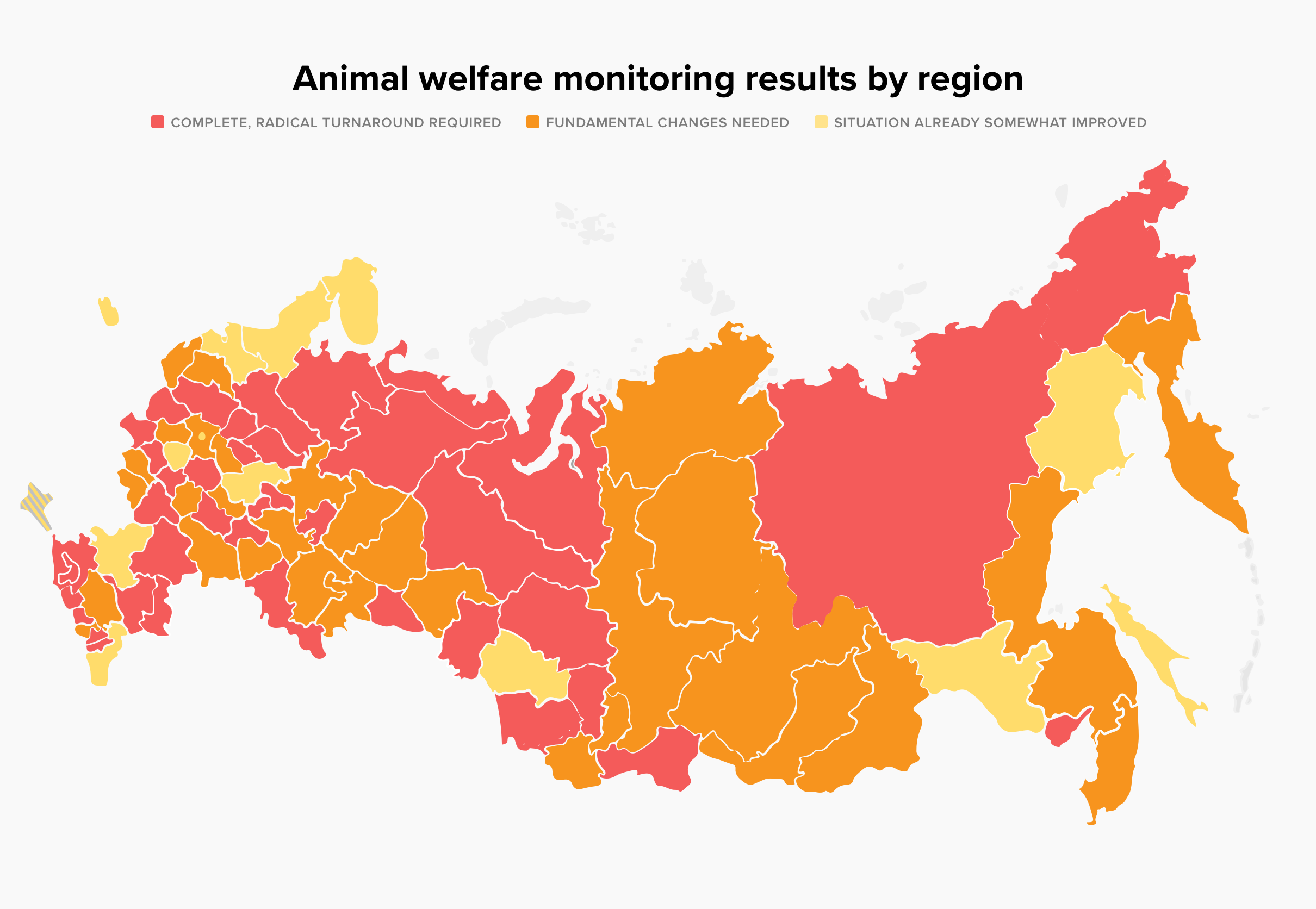
In December of 2018, the Russian government approved a new law titled “On the responsible treatment of animals” that is scheduled to take effect at the beginning of 2020. Among other things, the law prohibits catching stray dogs for the purpose of killing them. The Animal Welfare Association, a Russian nonprofit, spent half a year studying state purchases in Russia’s regions as well as local legislation that remained in place after the new federal law was passed only to conclude that in most regions, officials have continued to have stray animals euthanized. Meduza reviewed the association’s report and discovered that even if local governments follow Russia’s new, more humane regulations, cruelty toward stray dogs and cats throughout the country is likely set to increase.
Opinion and analysis
📡 Rogov: It's social media, stupid
In an article for Vedomosti, political analyst Kirill Rogov summarizes and interprets the main conclusions of a new 112-page report by the Liberal Mission Foundation, which found that Russians’ changing attitudes about protests and violence perpetrated by the authorities are associated with rising reliance on social media and blogs as a primary source of information.
Rogov says the study identifies new information-consumption patterns in Russia that differ from the familiar Internet-versus-television dichotomy. Instead, it’s younger people’s higher reliance on social media and blogging for information that is most closely associated with higher levels of support for protesters. Rogov says this is significant because Internet news outlets (particularly news-aggregation resources) have succumbed to censorship in recent years, while the flow of information on social media remains relatively competitive and free from state and corporate control, he says.
In other words, social networks simultaneously reduce activists’ organization costs while increasing public awareness about protests. Rogov says social media now shapes and mobilizes political loyalty in Russia to the same degree that television did when Vladimir Putin first came to power. This makes Russians’ changing information-consumption habits a “systemic challenge” to the Putin regime, which is now losing “ideological control” over “significant and active populations” within the country.
📺 Yakovenko: Putin's ‘free state media’ on display
In an article for Republic, sociologist Igor Yakovenko argues that Vladimir Putin’s much-publicized recent criticism of Russian state television’s negative Ukraine coverage was in fact a staged event intended to sustain the Kremlin’s “information war” against Ukraine under the guise of independent journalism. Yakovenko points out that TV pundits and talk show hosts have only redoubled their prejudice against Ukraine, sprinkling what he describes as hate speech with some nostalgic respect for Soviet Ukraine. “While Putin is in the Kremlin,” argues Yakovenko, “Russian television will be at war with Ukraine, regardless of what Putin says.” Moscow now seems to hope that some observers will mistake the media’s continued biased reporting for evidence of independence.
🎓 Guseinov: Russia the Great Power, my foot
On October 29, Russian linguist Gasan Guseinov ruffled feathers with a Facebook post where he complained that Russians show too little interest in foreign languages. He said specifically that newsstands in Moscow — a city with hundreds of thousands of immigrants — offer only publications in “the miserable and foul Russian language.” According to Guseinov, Russians try to justify their aversion to foreign languages as the privilege of a “great power,” but this insularity, he says, is actually the result of Russia’s “barbarity.”
In comments to the website RBC, Guseinov later clarified that his anger is directed not at the Russian language itself, but how it’s used today, especially by Russia’s justice system, which he says “mocks the language” in prosecutions against innocent people.
Guseinov’s outburst also caused trouble for his employer, Moscow’s Higher School of Economics. On October 30, university rector Yaroslav Kuzminov (who happens to be married to Russian Central Bank head Elvira Nabuillina) wrote his own Facebook post, questioning the accuracy of Guseinov’s remarks and faulting him for damaging his colleagues’ reputation.
Yours, Meduza