
The hypocrisy of “caviar diplomacy”: How Azerbaijan still manages to avoid European sanctions
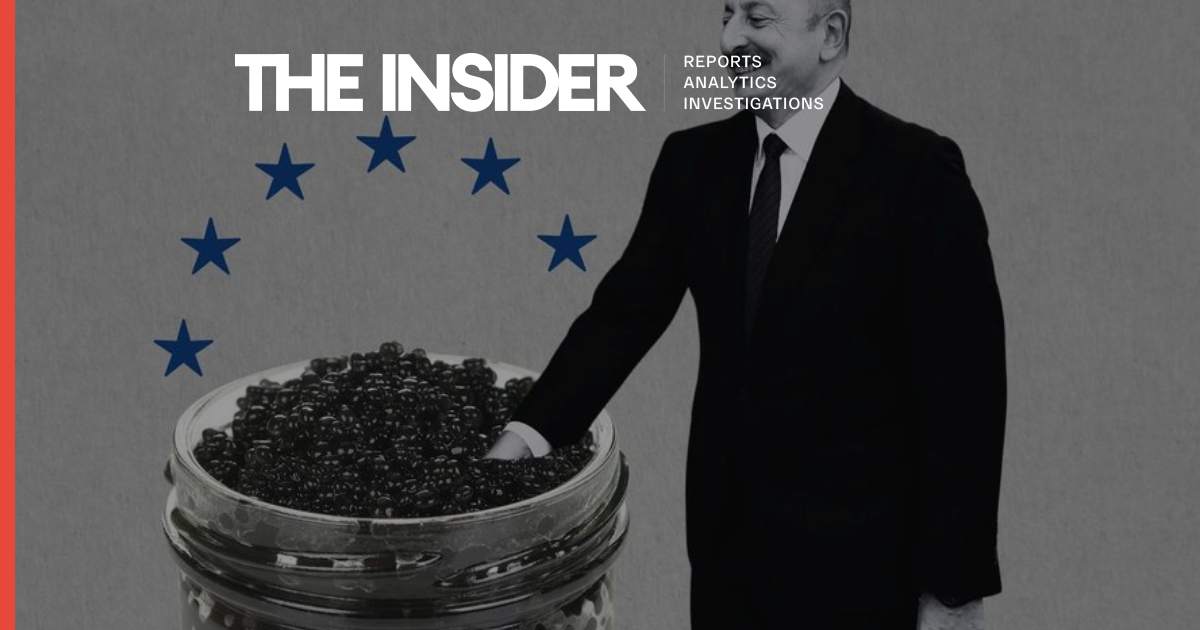
The challenge of credentials was made by the German social democratic politician Frank Schwabe, who in his speech pointed out that Azerbaijan has been engaged in bribing politicians ever since the country took its place in PACE in 2001. Azerbaijan's era of aggressive lobbying in the Council of Europe — the “caviar diplomacy” outlined in two reports by the European Stability Initiative in 2012 and 2016 — may have come to an end.
The Implications of Caviar Diplomacy
This brings us to the next topic: Caviar Diplomacy. In a text for the Italian Institute of International Political Studies (ISPI) think tank, I described the concept as follows:
“Caviar symbolizes a luxurious gift and in Diplomacy implies an expectation. The act of giving a gift creates an expectation of reciprocity, whether through a direct request or through an indirect loyalty that is built over time. For an investigative journalist, the correlation between a bribe (or a gift) and a political footprint or a positive statement is what defines the components of a completed act of Caviar Diplomacy.”
As for the purpose of Azerbaijan's unethical initiatives, the closest we can get to a clear description comes from The Azerbaijan European Society (TEAS), a state-funded lobbying organization that was excluded from PACE in 2018 after the bribery scandals were revealed. Its representatives were banned for life and the organization was shut down after the incident.
In 2014, TEAS described its activities to the EU's lobbying register, summarized as follows:
- Promoting Azerbaijan as a modern country with tremendous business opportunities.
- Raising awareness of the Nagorno-Karabakh conflict.
- Encouraging diaspora Azerbaijanis to support the “homeland.”
This description of its purpose is probably still relevant to Azerbaijan's diplomatic goals today. Although TEAS was shut down in 2018, the organization had already made its influence felt. In addition to its interactions with the national parliamentarians who sat in PACE, TEAS also worked with think tanks, journalists, and other decision-makers.
The most well-documented example is the Swedish think tank Institute for Security and Development Policy (ISDP), which TEAS funded for a couple of years in the mid-2010s.
ISDP is a policy advisor to the Swedish government and is active in the US through its subsidiary Central Asia-Caucasus Institute & Silk Road Studies Program. While the group has received funding from the Swedish and U.S. governments, it has also been the beneficiary of one-off payments — first from TEAS, and then from a construction company owned by the family of Azerbaijani president Aliyev. ISDP representatives hold several formal positions in Azerbaijani circles. For example, one of the leaders of the Central Asia-Caucasus Institute, Frederick Starr, is a board member of the Azerbaijani university ADA, whose main purpose is to train Azerbaijani diplomats. The same board also includes René van der Linden, who was chairman of PACE during some of the worst years of Caviar Diplomacy. Its vice president is Mehriban Aliyeva, Ilham Aliyev's wife.
The latest major report from October 2023 (after the ethnic cleansing) that ISDP published was titled “A New Spring for Caspian Transit and Trade.” It dealt with the importance of the Middle Corridor. Its authors were Svante Cornell, rector of ISDP, and Brenda Shaffer, one of the most mentioned researchers in Caviar Diplomacy circles. There have been several investigations into Shaffer’s ties to Azerbaijan.
In November 2023, the Swedish Ministry of Foreign Affairs decided to increase funding for ISDP thanks to the group’s expertise on the Caucasus.
An Era of Loyalty Through Paid Trips
It is difficult to say exactly how much influence the impact of Caviar Diplomacy has had on EU policy decisions in recent years, but it should not be underestimated. I mentioned ISDP in the text primarily as an example to illustrate how Western countries like Sweden have not only accepted Azerbaijan's undue influence apparatus, but also endorsed it. There are more examples all across Europe in the spheres of media, research, and academia.